

News
Map of forest cover and land use in the Ocean department – Cameroon
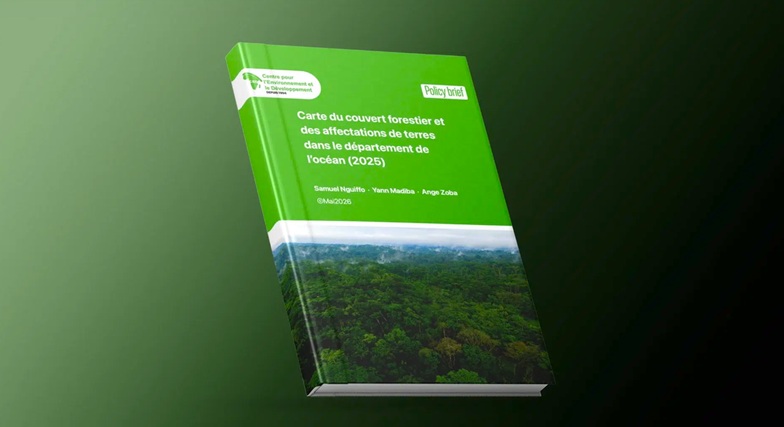
The policy brief was originally published by CED
The CED policy brief on forest cover and land-use allocation in Cameroon’s Ocean Department provides a detailed picture of where forests are being lost and how this overlaps with agricultural, mining and other land allocations. It reports 9,868 hectares of forest loss in 2025, with agriculture accounting for 83.8% of the total. The brief also identifies specific companies, concessions and land allocations, and highlights cases of overlapping land uses and concerns around land rights, consultation and environmental impacts. These findings are relevant to financial institutions because the companies and activities identified in the brief may form part of the portfolios of banks, investors and development finance institutions.
The brief is particularly relevant to the environmental and social risk management responsibilities of financial institutions. The identification of specific corporate land footprints, concession areas and areas of forest loss provides information that can be relevant to the assessment of clients’ environmental and social risks. Issues highlighted in the brief—including overlapping concessions, impacts on customary land rights, inadequate consultation and potential conflicts between different land uses—can translate into legal, operational, reputational and credit risks for companies and, consequently, for their financiers.
The brief also highlights the growing importance of geospatial information and satellite monitoring in understanding corporate environmental impacts. By linking forest loss with land allocations and company activities, the analysis demonstrates how publicly available spatial data can provide an additional source of information about activities associated with financed companies. For financial institutions, this is relevant to both initial due diligence and ongoing monitoring of environmental risks within their portfolios, particularly in sectors such as agriculture, mining and forestry where land use and deforestation are material considerations.
Finally, the brief calls for greater transparency around company payments and land footprints, linking these issues to Cameroon’s transparency commitments and EITI standards. This is relevant to financial institutions because transparency about where companies operate, what rights they hold over land, and what payments they make can form part of broader assessments of governance, corruption and environmental and social risk. Although the brief is not specifically addressed to banks or investors, its findings touch on several issues that are increasingly material to financial institutions: deforestation risk, land and community rights, corporate transparency, environmental and social due diligence, and the monitoring of financed activities.