

News
Women’s Land Rights and Financial Risk in Cocoa Value Chains
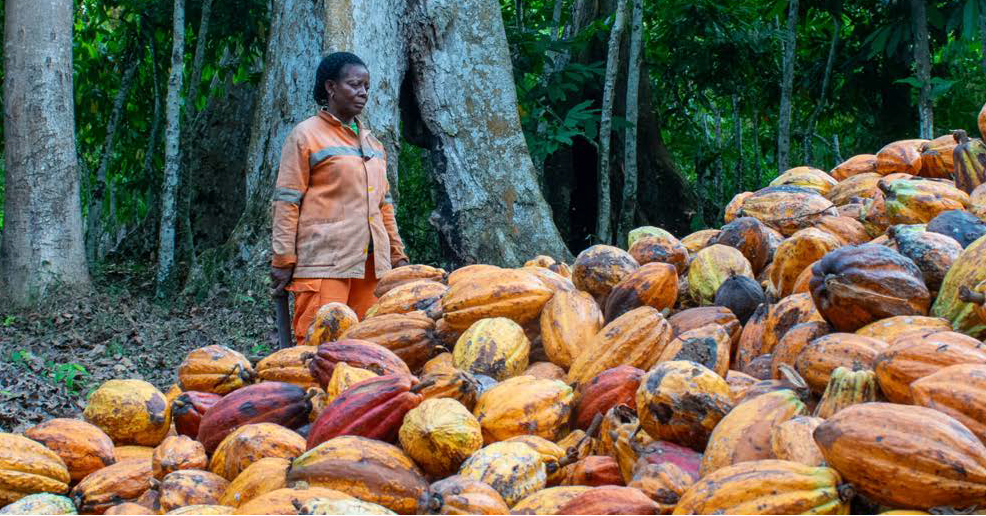
The report Women, the backbone of cocoa production in Cameroon, published by CED and FERN, exposes a structural weakness in the cocoa sector that has direct implications for banks and investors. Women provide a large share of the labour that sustains cocoa production, yet they remain largely excluded from land ownership, income control, and financial decision-making. This exclusion is not only a social issue — it is a driver of financial instability and risk across cocoa portfolios.
Cocoa is described as “both a main source of income and a lever for economic and social empowerment.” In practice, however, income control is highly unequal. When cocoa is sold, “it is the men who receive the proceeds and distribute them.” Women are often unaware of sale prices or total revenues and depend on partial transfers for household expenses. This “highly asymmetrical relationship” weakens household financial planning, limits reinvestment in production, and increases vulnerability to price shocks — all factors that heighten income volatility and default risk.
The report further highlights how prevailing financing practices exacerbate instability. Middlemen commonly provide advances in cash or inputs, then buy cocoa at prices they set unilaterally. While this provides short-term liquidity, it traps producers — especially women — in cycles of debt and chronic precariousness. Such dependency increases exposure to repayment failures and undermines the reliability of supply chains financed by banks and investors.
Crucially, land lies “at the heart of access to credit, technical support, certification programmes, cooperatives, and export markets.” Because women’s land rights are rarely recognised, they are systematically excluded from formal finance. This concentrates financial exposure in fewer actors, reduces diversification, and weakens the resilience of investment portfolios dependent on cocoa production.
For banks and investors, ignoring women’s land rights amplifies systemic risk. Recognising women as landholders and financial actors is not only a gender issue — it is essential to reducing default risk, stabilising incomes, and protecting long-term portfolio value.